ISO 14001
ISO 14001 Environmental Management System
A framework for managing environmental responsibilities.
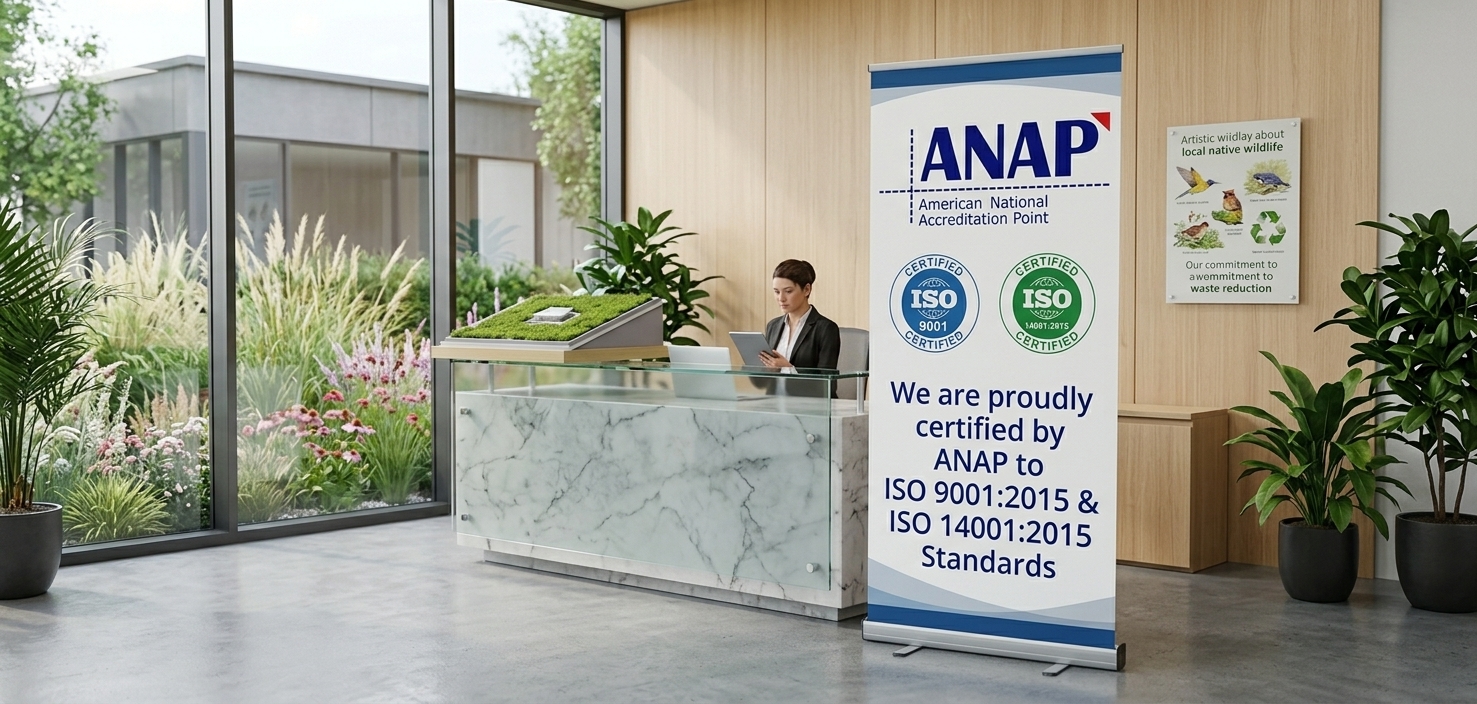
ISO 14001 specifies the requirements for an environmental management system that an organisation can use to enhance its environmental performance. It helps organisations manage their environmental responsibilities in a systematic way that contributes to sustainability.
The standard looks at the organisation's environmental aspects, such as emissions, waste and resource use, and at the legal and other requirements that apply, and asks it to set objectives to improve its performance.
Key requirements
What ISO 14001 asks for
Context of the organisation
Understand internal and external issues, interested parties and the scope of the system.
Leadership
Top management shows commitment, sets the policy and assigns roles and responsibilities.
Planning
Address risks and opportunities and set measurable objectives.
Support
Provide the resources, competence, awareness, communication and documented information needed.
Environmental aspects
Identify the activities, products and services that affect the environment and decide which are significant.
Compliance obligations
Know the legal and other requirements that apply and evaluate compliance with them.
Performance evaluation
Monitor, measure, audit internally and review the system at management level.
Improvement
Correct nonconformities and keep improving the system.
Benefits
Why organisations use it
- Better control of environmental impacts
- Support for legal compliance
- Reduced waste and resource costs
- Trust from regulators, communities and customers
- A life cycle perspective on products and services
Who it is for
Typical organisations
ANAP accreditation
How ANAP accredits ISO 14001 certification bodies
Certification bodies auditing ISO 14001 are assessed against ISO/IEC 17021-1, together with the environmental-specific competence requirements of ISO/IEC 17021-2.
FAQ
Frequently asked questions
Does ISO 14001 set environmental performance targets?+
No. It requires the organisation to set its own objectives, meet its legal obligations and commit to improvement, rather than prescribing fixed performance levels.
Can it be combined with ISO 9001 and ISO 45001?+
Yes. Because they share the same high level structure, the three can be run as one integrated management system and audited together.